Designing Timber Playgrounds for Australian Public Spaces
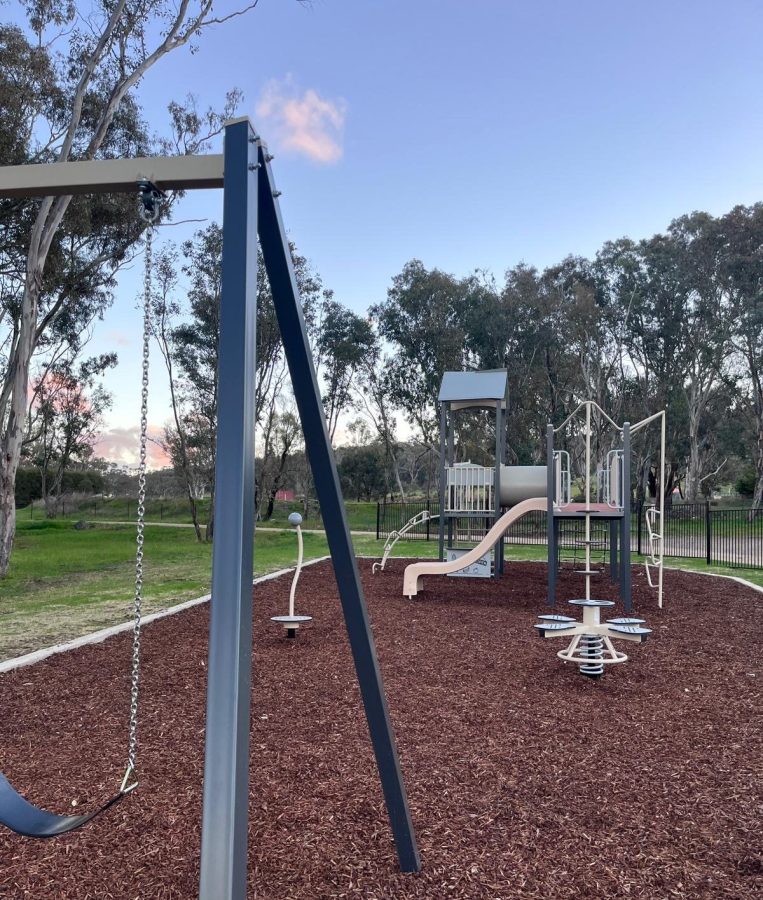
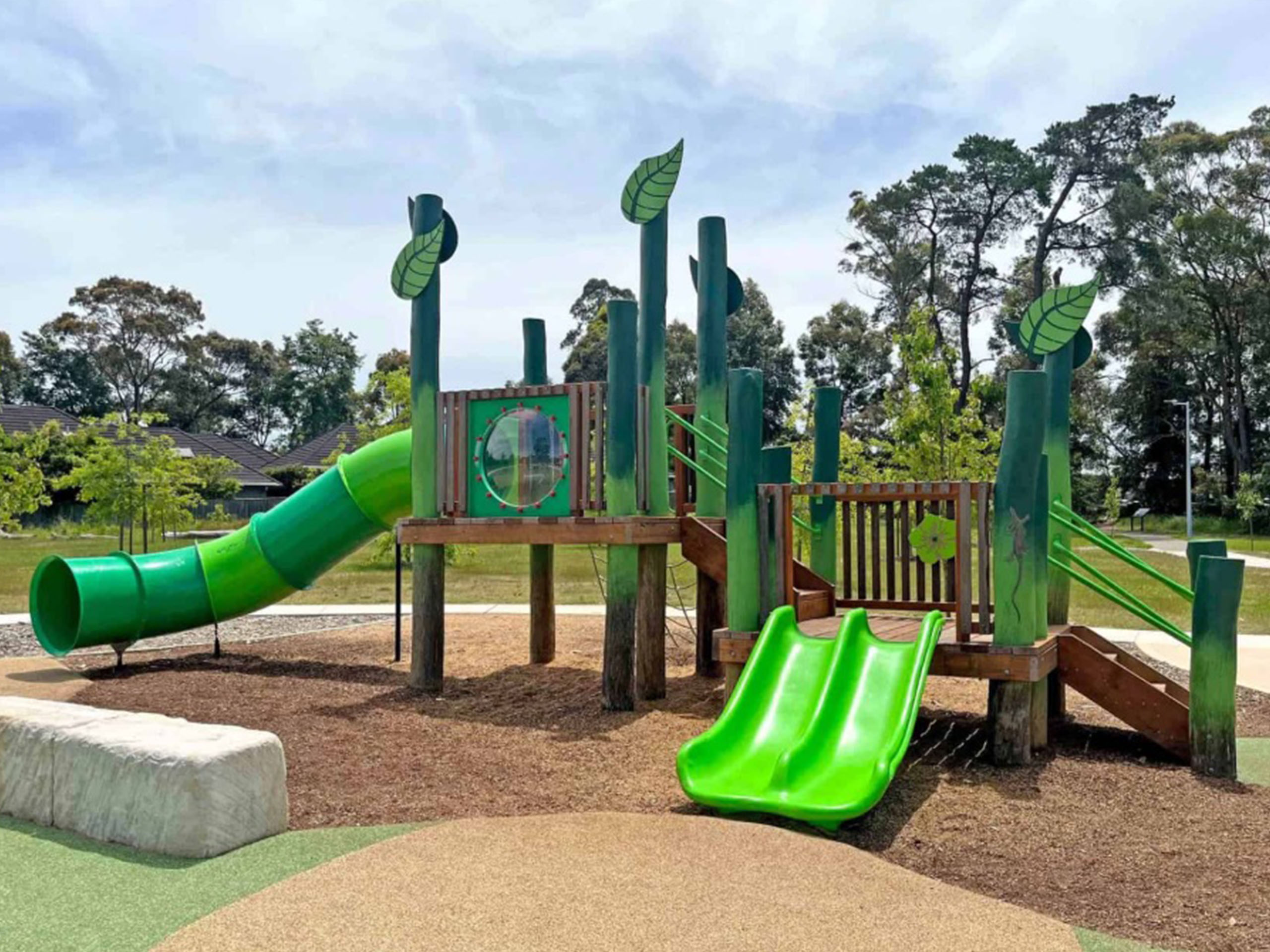
Modular steel systems and commercial plastic slides bring fast-paced, high-capacity action to a site. But bringing in native Australian timber completely changes how a play space feels and functions.
If you are planning an upcoming project, here is a practical look at how timber performs on the ground, how to keep it looking great, and how to navigate the engineering side.
Why Timber is a Natural Choice for Commercial Sites
Adding native timber to a play space isn’t just about making it look nice in project renders. It solves a few real-world problems that landscape architects and school committees run into on-site:
Cooler Touch Surfaces in Summer Heat: Anyone who has walked across a schoolyard in February knows how hot unshaded metal and dark plastics can get. Wood acts as a natural insulator, meaning posts, balance beams, and platforms stay comfortable to touch all summer.
Graceful Aging & UV Resilience: Intense UV breaks down colours and can make some plastics brittle over time. Quality Australian hardwoods weather into silver-grey tones that look like they naturally belong in the landscape.
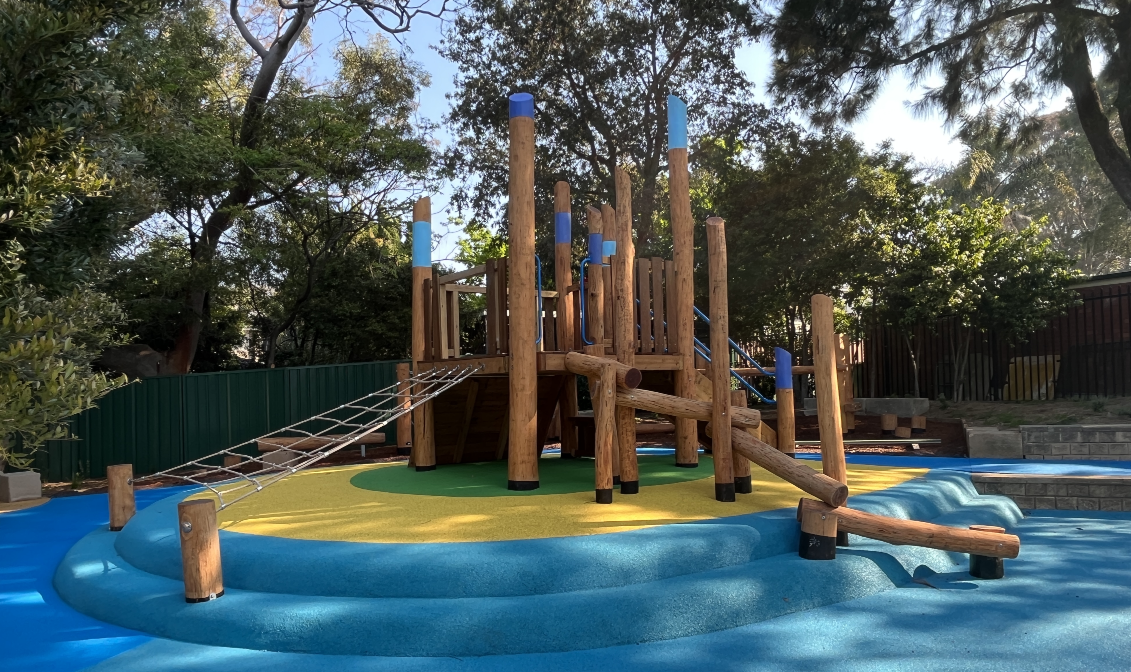
Biophilic & Sensory Play Benefits: In modern architecture and playground planning, biophilic design simply means designing spaces that reconnect kids with nature. Using natural materials like Australian hardwood, log balance beams, and stone steppers supports childhood development across different age groups, encouraging calmer outdoor play and physical activity.
Australian Native Hardwoods & Durable Timbers
For public parks and school playgrounds, dense native timbers are the default. They hold structural bolts tight, resist splintering under constant foot traffic, and don’t rely on heavy chemical treatments to survive outdoors:
1. Ironbark (Red & Grey)
Extreme density (Class 1 durability above and below ground). It withstands severe mechanical wear, naturally resists termites, and won’t soften under heavy traffic.
2. Spotted Gum & Tallowwood
High structural strength with minimal movement. Excellent for main posts, decking, and load-bearing timber frames that take full sun and rain year-round.
3. White Cypress
A high-performing native softwood. While technically a softwood, it naturally resists termites and decay without pressure treatment. It boasts excellent dimensional stability, meaning it shrinks, cracks, and checks significantly less than other timbers, making it ideal for vertical feature uprights, log balance runs, and nature play trails.
Why Standard Softwoods Fall Short (And Why Cypress is the Exception)
Standard treated pine and softwoods work fine for residential backyards, but they generally don’t last in commercial settings. They require heavy chemical pressure treatments, splinter easily under high foot traffic, and struggle to hold structural bolts over time.
The clear exception in Australian playground design is White Cypress. Unlike pine, White Cypress gives designers the easy workability of a softwood, plus the natural termite resistance, low shrinkage, and low cracking expected of a commercial-grade timber, all without harsh chemical treatments.
Dealing with Ground Rot and Safety Compliance
Safety compliance and long-term maintenance are usually the two biggest questions from WHS and school boards. Getting timber through sign-off comes down to smart upfront engineering.
Long-Term Timber Engineering & Rot Prevention
Timber durability on public sites comes down to selection and smart sub-surface design:
1. Class 1 Australian Hardwood Selection
For nature play elements, log balance runs, and vertical posts, we specify Class 1 Durability Ironbark. Class 1 native hardwoods carry high density and natural oils that resist rot, termites, and decay even in direct ground contact, completely removing the need for harsh chemical pressure treatments.
2. Galvanised Steel Hybrid Framing
For high-traffic play units, our Fortitude Range anchors structural loads via in-ground galvanised steel posts, giving you structural steel durability underground with warm native hardwood cladding above the surface.
Meeting Australian Safety Standards (AS 4685)
Every commercial playground in Australia operates under the same trusted framework: the AS 4685 standards.
1. Head & Finger Entrapment Checks
Openings, log junctions, and platform gaps are geometry-checked to eliminate catch points.
2. Splinter & Snag Protection
Timber elements are debarked, sanded smooth, and finished with countersunk stainless steel or galvanised bolts to keep play completely snag-free.
3. Compliant Softfall Depths
Fall zones are paired with certified organic bark mulch or wet-pour rubber, matched mathematically to the equipment’s critical fall height.
Exploring Play Workshop’s Native Timber Collections & Hybrid Equipment
Rather than pushing rigid off-the-shelf sets, Play Workshop custom-designs and manufactures timber play equipment in Sydney to fit the exact slope, shade profile, and foot-traffic demands of your site. By pairing local manufacturing with our range of timber collections and hybrid steel systems, our design team builds spaces tailored directly to your site master plan.
 Forest Range (Structural Hardwood Towers)
• Best Suited For: Regional parks, landmark public spaces, and active height zones
• Key Design Feature: High-impact climbing challenges using heavy hardwood posts
 Nature Play Range (100% Australian Hardwood)
• Best Suited For: Bushland settings, unstructured play trails, and tree-lined school grounds
• Key Design Feature: Organic log balance beams, steppers, and teepees
 Instinctive Range (Scaled Timber Modules)
• Best Suited For: Early Learning Centres (ELCs) & quiet sensory pockets in primary schools
• Key Design Feature: Low-profile sensory play for motor skill and spatial confidence
 Fortitude Range (Hybrid Steel & Timber)
• Best Suited For: High-density school yards and heavy-use recess spaces
• Key Design Feature: Galvanised steel structural posts with natural timber cladding
Real-World Play Workshop Projects
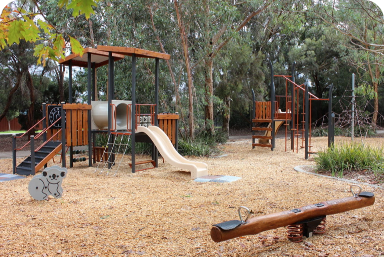
Bridgewater Boulevard Reserve
Completed March 2026
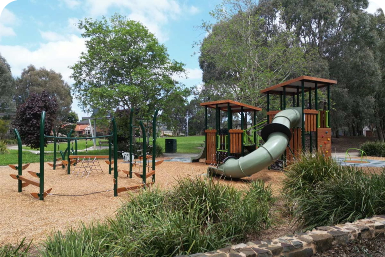
Hillgrove Crescent Reserve
Completed October 2024
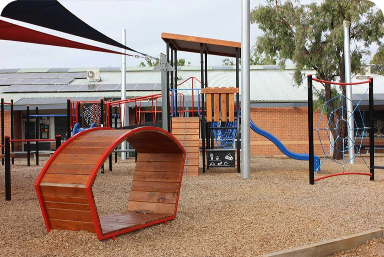
Heany Park Primary School
Completed February 2026
Partnering on Your Next Playground Project
Upgrading a park or school playground usually comes down to tight timelines, strict budget boundaries, and getting safety sign-offs over the line without endless back-and-forth.
Our Sydney team designs and builds across both native Australian hardwoods and modular steel systems. If you have a set of site plans, a specific budget target, or just want to run a few custom ideas past us, we are always up for a practical chat about what will work best on your site.